Above 8,000 metres

The 14 Eight-Thousanders

Only fourteen mountains on earth rise above 8,000 m, and all of them stand in one corner of Asia. Here is each one — how high, where, what its name means, who climbed it first, and where a trekker can see it.

At a glance

14Mountains above 8,000 m — and nowhere outside Asia comes within 1,000 m of them
10 + 4Ten in the Himalaya, four in the Karakoram, all within 1,500 km of each other
8Stand wholly or partly in Nepal. Kangchenjunga is the one shared with India
1950–1964All fourteen were first climbed within fifteen years, from Annapurna to Shishapangma
822mThe gap between the highest, Everest, and the lowest, Shishapangma
⅓Roughly the oxygen available on the summits compared with sea level

The 8,000 m line is a human invention — a round number in metres — but it marks something real. Above it the air is too thin to live in for long, and every one of these mountains was a national prize in the 1950s. Climbers call them the eight-thousanders.

How they compare

Bars are scaled from 7,900 m so the differences show. Peaks marked Karakoram stand in that range; the other ten are in the Himalaya.

The fourteen, highest first

Mount Everest 01 Himalaya

Mount Everest

Sagarmatha · Chomolungma

8,849 m 29,032 ft

The highest point on earth, measured at 8,848.86 m by Nepal and China in 2020. Its two standard routes are not technically extreme, which is why it draws hundreds of climbers each spring — but the Khumbu Icefall, the altitude and the queues near the summit make it serious. Most climbers use bottled oxygen above 7,000 m.

Where
Nepal · Tibet — Mahalangur Himal
The name
“Forehead of the sky” (Nepali) · “Goddess mother of the world” (Tibetan)
First ascent
29 May 1953 — Tenzing Norgay & Edmund Hillary. British expedition led by John Hunt.
First in winter
1980 — Krzysztof Wielicki & Leszek Cichy
Usual route
South Col and south-east ridge from Nepal; north col and north-east ridge from Tibet
Full profile: history & little-known facts →
K2 02 Karakoram

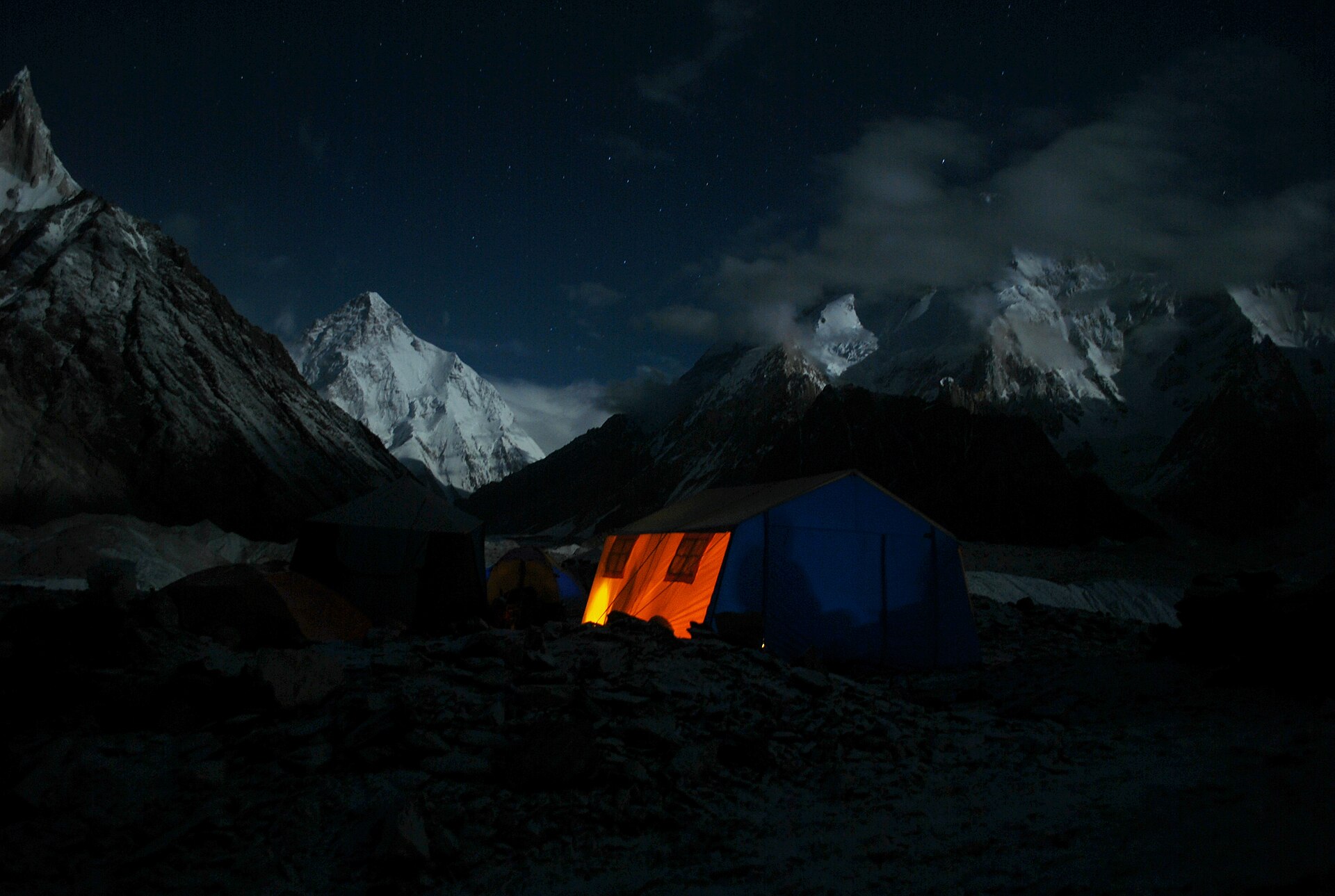
K2

Chogori · Mount Godwin-Austen

8,611 m 28,251 ft

Steeper, colder and more remote than Everest, and harder by every route — climbers call it the Savage Mountain. There is no easy way up and no easy way down, and the Bottleneck couloir below the summit sits under a wall of hanging ice. It was the last of the fourteen to be climbed in winter.

Where
Gilgit-Baltistan · Xinjiang — Baltoro Muztagh
The name
The second peak logged in the Karakoram survey of 1856. “Chogori” is Balti for “great mountain”
First ascent
31 July 1954 — Lino Lacedelli & Achille Compagnoni. Italian expedition led by Ardito Desio.
First in winter
2021 — a team of ten Nepali climbers
Usual route
Abruzzi Spur on the south-east ridge
Full profile: history & little-known facts →
Kangchenjunga 03 Himalaya

Kangchenjunga

Khangchendzonga

8,586 m 28,169 ft

The highest mountain in India and, until 1852, thought to be the highest in the world. The first climbers stopped a few steps short of the top, keeping a promise to the ruler of Sikkim that the summit would stay untrodden — a custom many parties still follow. Sikkim does not allow climbing from its side.

Where
Nepal · India (Sikkim) — Kangchenjunga Himal
The name
“Five treasures of the great snow”, for its five summits
First ascent
25 May 1955 — Joe Brown & George Band. British expedition led by Charles Evans.
First in winter
1986 — Jerzy Kukuczka & Krzysztof Wielicki
Usual route
South-west face from the Yalung glacier in Nepal
See it on
Goecha La →
Full profile: history & little-known facts →
Lhotse 04 Himalaya

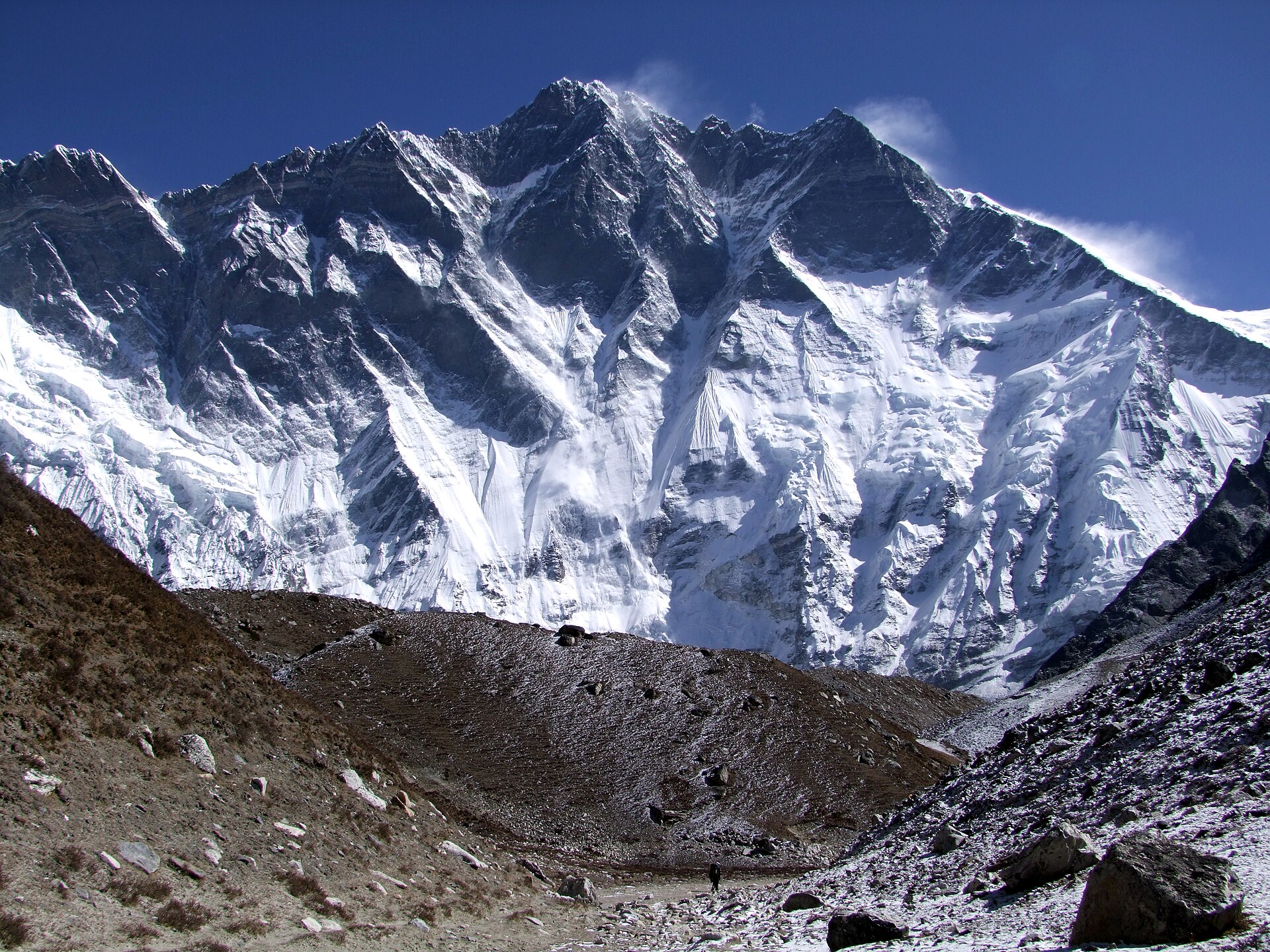
Lhotse

8,516 m 27,940 ft

Joined to Everest by the South Col, so the two share base camp and most of the route. Its south face, a 3,300 m wall of rock and ice, is one of the great problems of Himalayan climbing. Trekkers see it from Chhukung and Kala Patthar.

Where
Nepal · Tibet — Mahalangur Himal
The name
“South peak” in Tibetan — it stands just south of Everest
First ascent
18 May 1956 — Ernst Reiss & Fritz Luchsinger. Swiss expedition.
First in winter
1988 — Krzysztof Wielicki, alone
Usual route
West face, sharing the Everest route as far as the Lhotse Face, then the Reiss couloir
Full profile: history & little-known facts →
Makalu 05 Himalaya

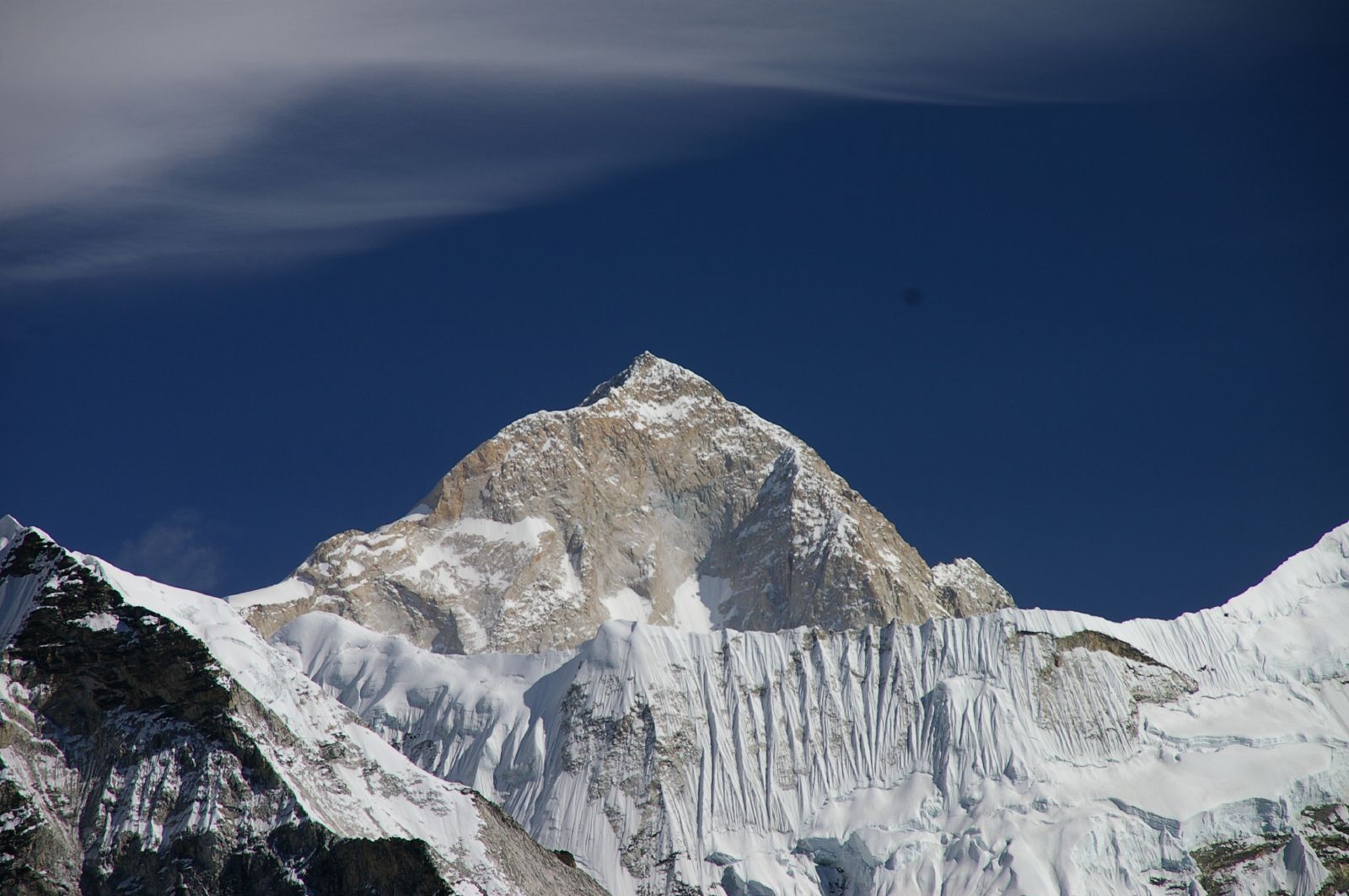
Makalu

8,485 m 27,838 ft

A four-sided pyramid standing alone 19 km south-east of Everest, with sharp ridges and steep final rock. It is one of the harder eight-thousanders and among the least crowded. The whole French team reached the summit over three days, a rare thing at the time.

Where
Nepal · Tibet — Mahalangur Himal
The name
Probably from the Sanskrit “Maha Kala”, a name of Shiva
First ascent
15 May 1955 — Lionel Terray & Jean Couzy. French expedition led by Jean Franco.
First in winter
2009 — Simone Moro & Denis Urubko
Usual route
North face and north-east ridge by the Makalu La
Full profile: history & little-known facts →
Cho Oyu 06 Himalaya

Cho Oyu

8,188 m 26,864 ft

Generally regarded as the most approachable of the fourteen: the standard route has moderate slopes and the Nangpa La, an old trade pass, lies just to the west. It is the usual first eight-thousander for climbers preparing for Everest. From Nepal it fills the head of the Gokyo valley.

Where
Nepal · Tibet — Mahalangur Himal
The name
“Turquoise goddess” in Tibetan
First ascent
19 October 1954 — Herbert Tichy, Joseph Jöchler & Pasang Dawa Lama. A small Austrian expedition.
First in winter
1985 — Maciej Berbeka & Maciej Pawlikowski
Usual route
North-west ridge from Tibet
Full profile: history & little-known facts →
Dhaulagiri I 07 Himalaya

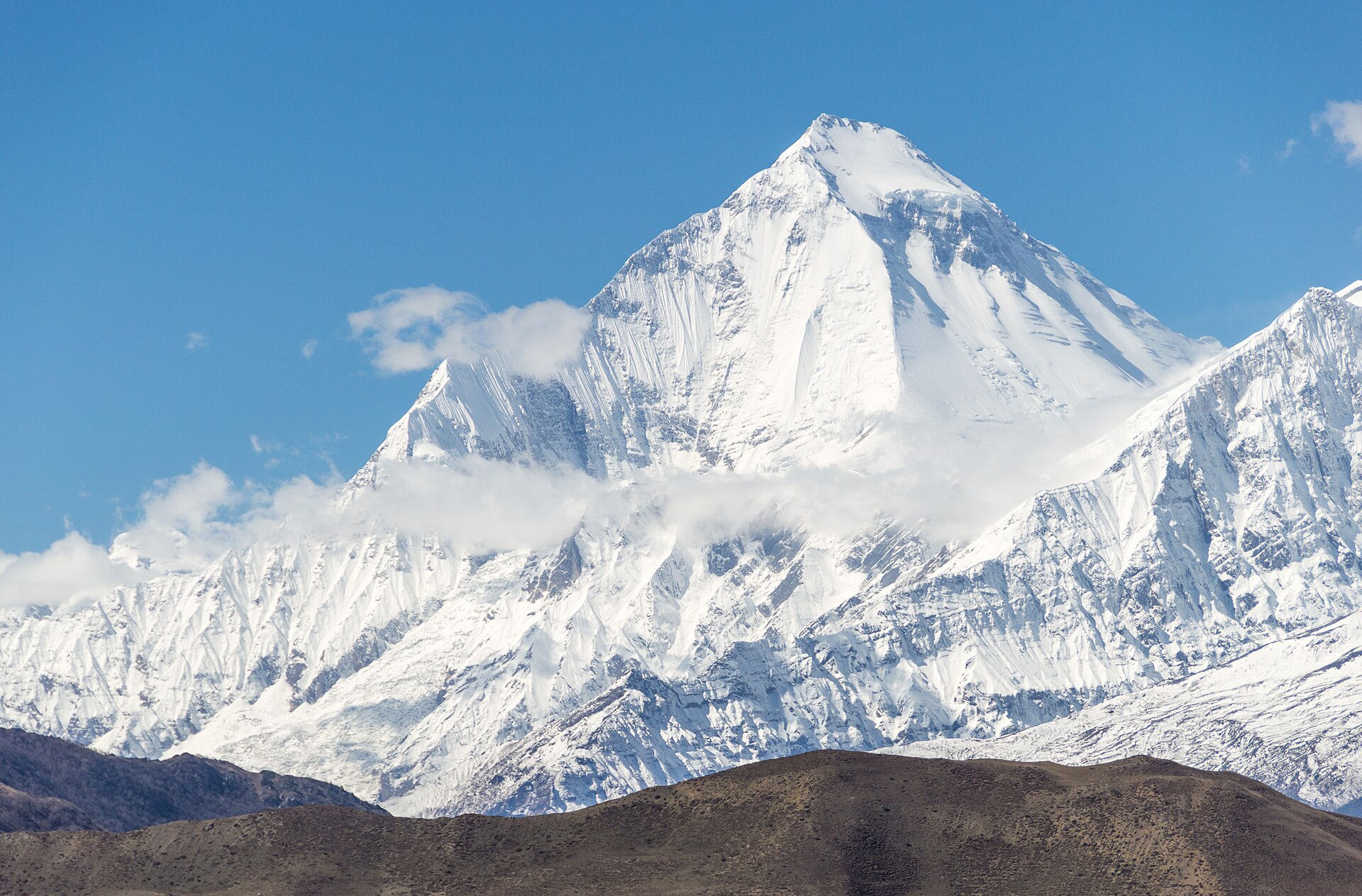
Dhaulagiri I

8,167 m 26,795 ft

For thirty years after 1808 Western surveyors believed this was the highest mountain in the world. It rises about 7,000 m above the Kali Gandaki gorge, facing Annapurna across the valley. The first-ascent expedition was supplied by a small aircraft that landed on the glacier.

Where
Nepal — Dhaulagiri Himal
The name
“White mountain”, from the Sanskrit dhavala giri
First ascent
13 May 1960 — Kurt Diemberger, Peter Diener, Ernst Forrer, Albin Schelbert, Nyima Dorje & Nawang Dorje. Swiss–Austrian expedition led by Max Eiselin.
First in winter
1985 — Jerzy Kukuczka & Andrzej Czok
Usual route
North-east ridge
See it on
Poon Hill →
Full profile: history & little-known facts →
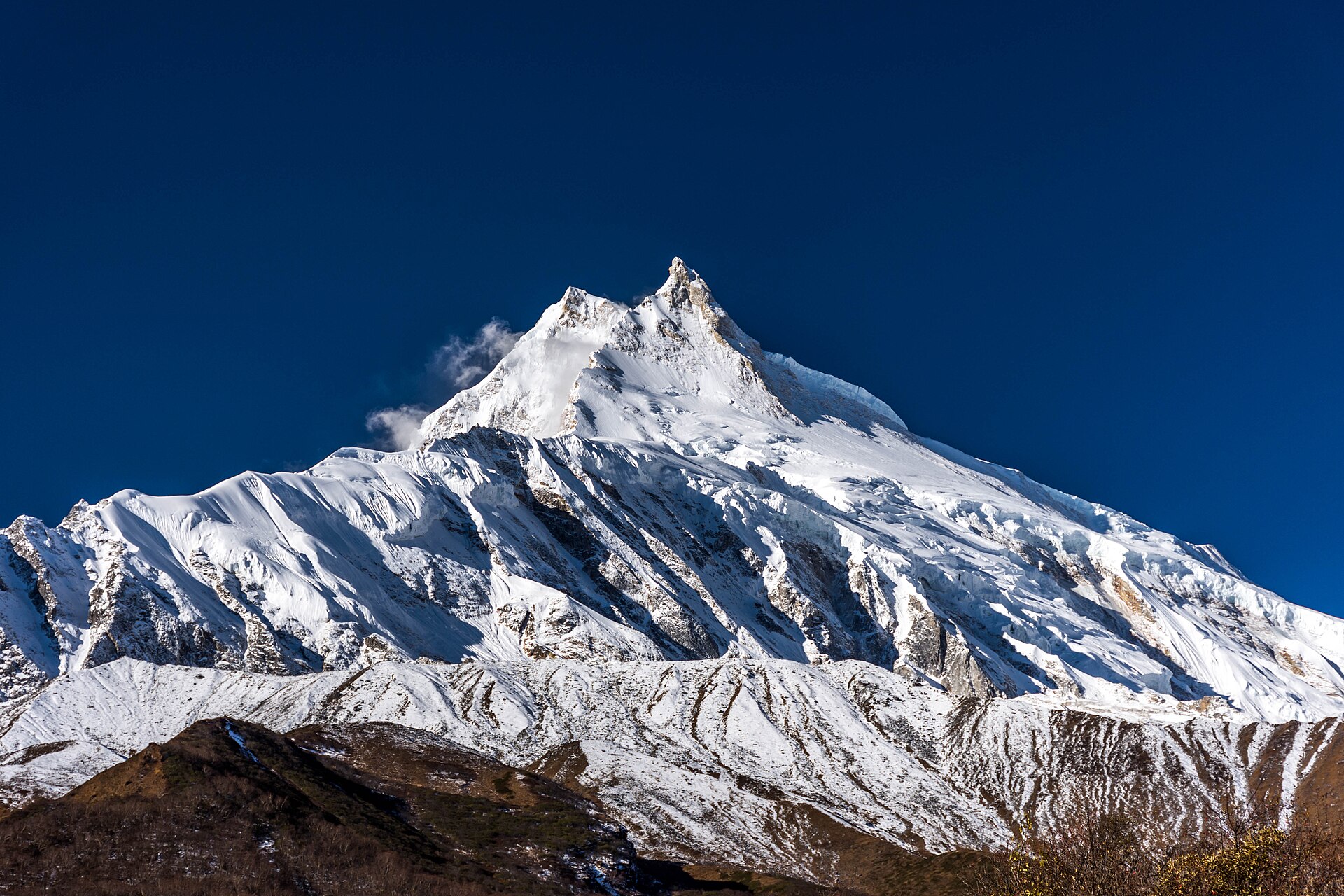
Manaslu 08 Himalaya

Manaslu

Kutang

8,163 m 26,781 ft

Climbed first by a Japanese team, and still closely associated with Japan. It has become the most popular autumn eight-thousander, though its slopes are prone to avalanche. The trek around it over the Larkya La is one of the finest in Nepal.

Where
Nepal — Mansiri Himal
The name
“Mountain of the spirit”, from the Sanskrit manasa
First ascent
9 May 1956 — Toshio Imanishi & Gyalzen Norbu. Japanese expedition.
First in winter
1984 — Maciej Berbeka & Ryszard Gajewski
Usual route
North-east face
Full profile: history & little-known facts →
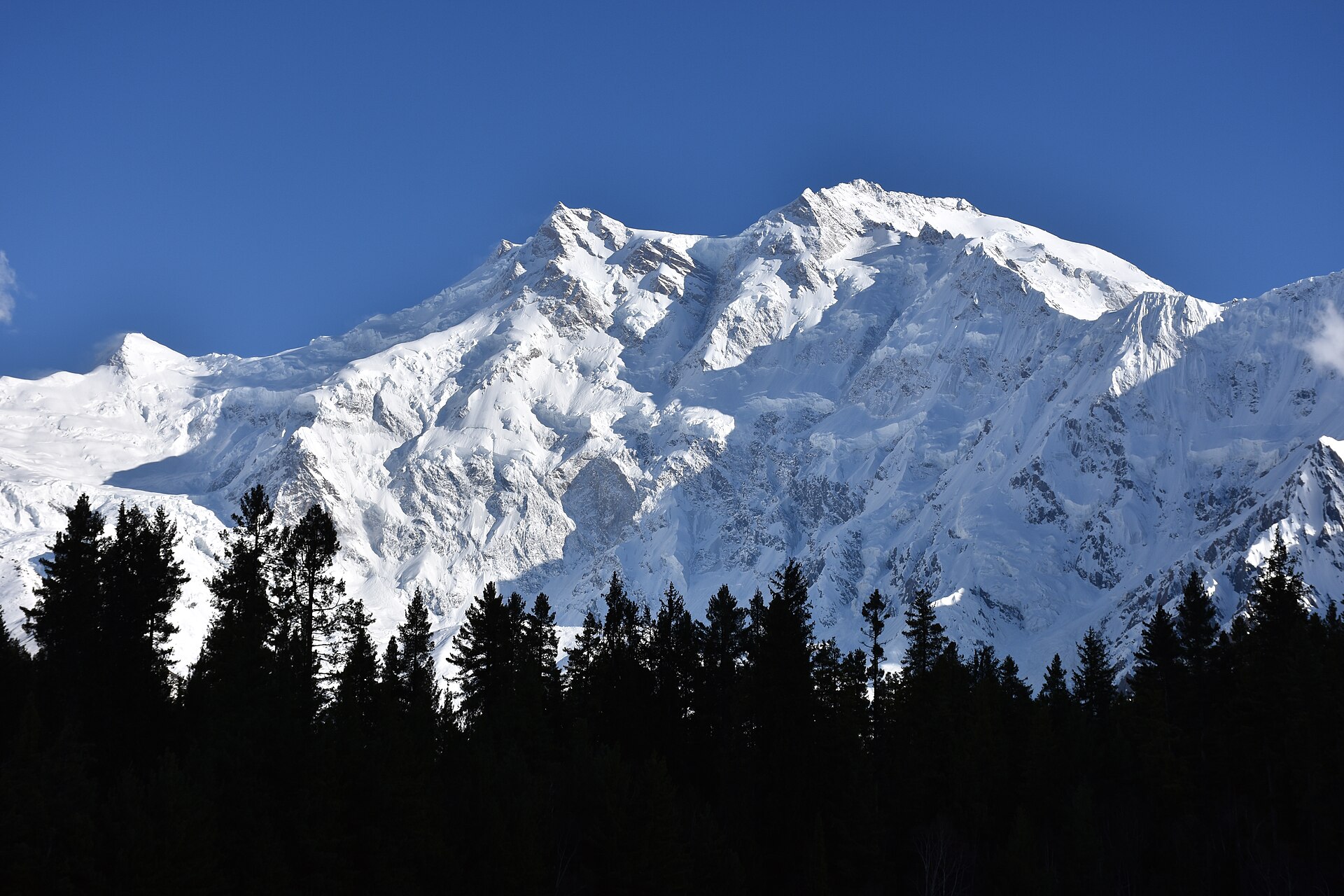
Nanga Parbat 09 Himalaya

Nanga Parbat

Diamir

8,126 m 26,660 ft

The western anchor of the Himalaya, standing above the bend of the Indus. Its Rupal face, about 4,600 m high, is often called the tallest mountain wall on earth. Thirty-one people died trying to climb it before Buhl reached the top, which earned it the name Killer Mountain.

Where
Gilgit-Baltistan — Western Himalaya
The name
“Naked mountain” in Sanskrit · Diamir, “king of mountains”
First ascent
3 July 1953 — Hermann Buhl, alone and without bottled oxygen. German–Austrian expedition.
First in winter
2016 — Simone Moro, Alex Txikon & Ali Sadpara
Usual route
Kinshofer route on the Diamir face
Full profile: history & little-known facts →
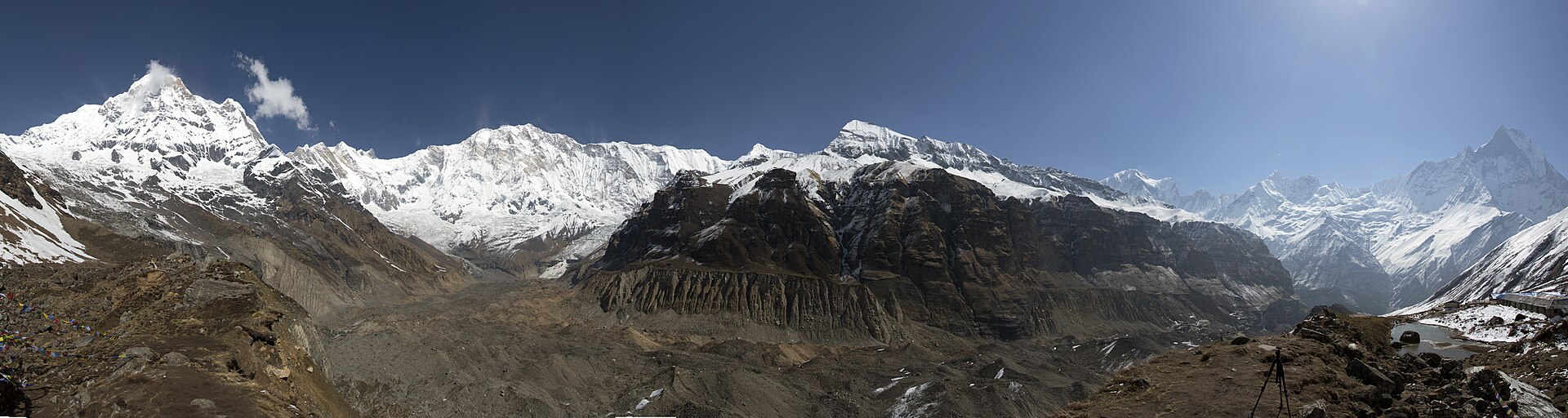
Annapurna I 10 Himalaya

Annapurna I

8,091 m 26,545 ft

The first eight-thousander ever climbed, on the first attempt and without a reliable map — the team spent weeks simply finding the mountain. It has also, over its history, been the most dangerous of the fourteen for those who try it, mainly because of avalanches. The base camp trek goes to its south side.

Where
Nepal — Annapurna Himal
The name
“Full of food” — the goddess of the harvest
First ascent
3 June 1950 — Maurice Herzog & Louis Lachenal. French expedition.
First in winter
1987 — Jerzy Kukuczka & Artur Hajzer
Usual route
North face
Full profile: history & little-known facts →
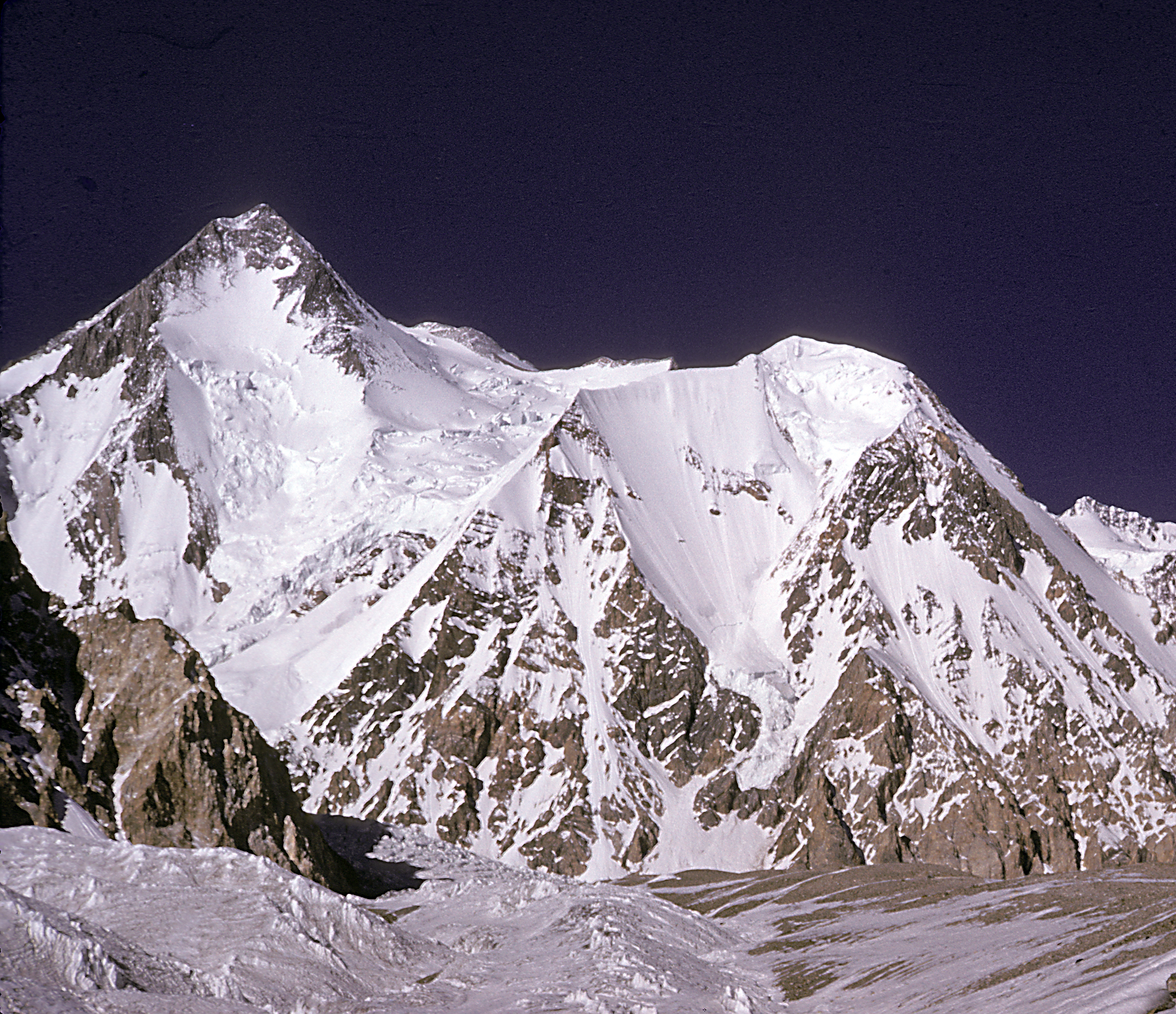
Gasherbrum I 11 Karakoram

Gasherbrum I

Hidden Peak · K5

8,080 m 26,509 ft

Called Hidden Peak because it cannot be seen from the Baltoro glacier until you are almost beneath it. In 1975 Reinhold Messner and Peter Habeler climbed it in three days with no fixed camps or ropes — the first alpine-style ascent of an eight-thousander.

Where
Gilgit-Baltistan · Xinjiang — Baltoro Muztagh
The name
“Beautiful mountain” in Balti
First ascent
5 July 1958 — Pete Schoening & Andy Kauffman. American expedition led by Nicholas Clinch.
First in winter
2012 — Adam Bielecki & Janusz Gołąb
Usual route
Japanese couloir on the north-west face
Full profile: history & little-known facts →
Broad Peak 12 Karakoram

Broad Peak

Faichan Kangri · K3

8,051 m 26,414 ft

K2’s neighbour, 8 km away across the Godwin-Austen glacier. The four Austrians climbed it without high-altitude porters or bottled oxygen, a style far ahead of its time. Its long summit ridge has several tops, and stopping at the wrong one is an easy mistake.

Where
Gilgit-Baltistan · Xinjiang — Baltoro Muztagh
The name
Named for its summit ridge, well over a kilometre long
First ascent
9 June 1957 — Fritz Wintersteller, Marcus Schmuck, Kurt Diemberger & Hermann Buhl. Austrian expedition.
First in winter
2013 — Bielecki, Berbeka, Kowalski & Małek
Usual route
West spur
Full profile: history & little-known facts →
Gasherbrum II 13 Karakoram

Gasherbrum II

K4

8,035 m 26,362 ft

A neat snow pyramid, and the most often climbed of the Karakoram giants. With Cho Oyu it is considered one of the less difficult eight-thousanders, though the approach up the Baltoro takes a week on foot.

Where
Gilgit-Baltistan · Xinjiang — Baltoro Muztagh
The name
“Beautiful mountain” in Balti
First ascent
7 July 1956 — Fritz Moravec, Josef Larch & Hans Willenpart. Austrian expedition.
First in winter
2011 — Simone Moro, Denis Urubko & Cory Richards
Usual route
South-west ridge
Full profile: history & little-known facts →
Shishapangma 14 Himalaya

Shishapangma

Gosainthan · Xixabangma

8,027 m 26,335 ft

The lowest of the fourteen, the only one entirely inside Tibet, and the last to be climbed, because the region was closed to foreigners. Many climbers stop at the central summit; the true top lies along a narrow, exposed ridge beyond it.

Where
Tibet — Jugal Himal
The name
“Crest above the grassy plains” in Tibetan
First ascent
2 May 1964 — A ten-member team led by Xu Jing. Chinese expedition.
First in winter
2005 — Piotr Morawski & Simone Moro
Usual route
North-west face and north ridge
Full profile: history & little-known facts →

Gilgit-Baltistan is administered by Pakistan and claimed by India. Heights are the commonly accepted figures and differ by a few metres between surveys.

The death zone

Above about 8,000 m the pressure of the air is a third of what it is at sea level. The body cannot adapt to that. It stops digesting food properly, sleep does not restore it, and thinking slows. However fit the climber, they are slowly deteriorating for every hour they stay.

That is why summit days are run against the clock: leave high camp around midnight, reach the top by late morning, and be back down before dark. Most accidents happen on the descent, when climbers are exhausted and the weather turns in the afternoon.

Bottled oxygen makes the mountain feel a thousand metres or so lower, and most climbers use it. A small number climb without, as Messner and Habeler first did on Everest in 1978.

Trekkers never go near these heights. Everest Base Camp is at 5,364 m and Kala Patthar at 5,545 m — high enough to need care with acclimatisation, but well inside what a healthy body can adjust to.

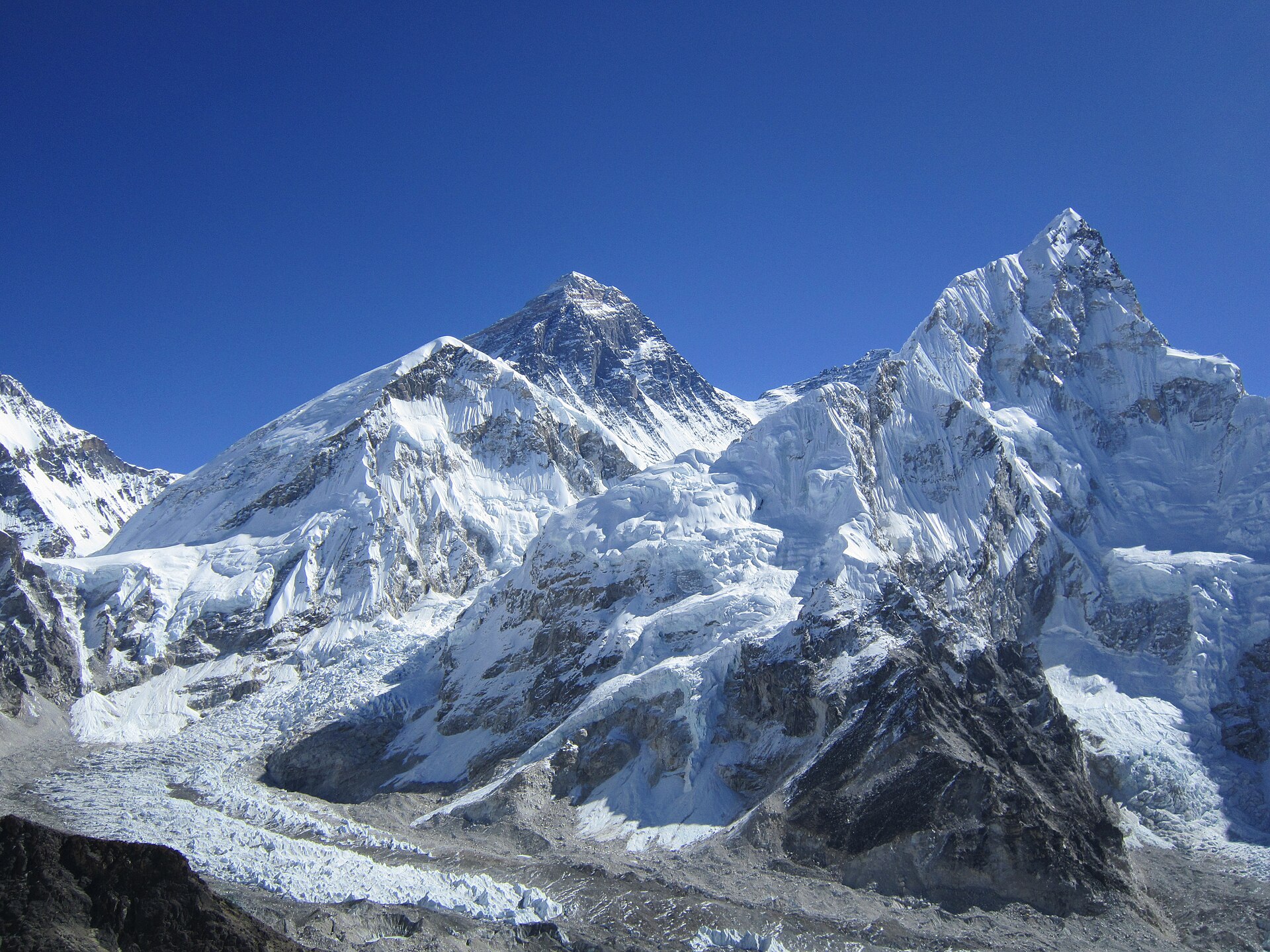
Lhotse
Lhotse, 8,516 m. Everest and Lhotse share a route as far as the Lhotse Face.

Completing the fourteen

  1. 1950

    The first

    Annapurna I is climbed by Maurice Herzog and Louis Lachenal.

  2. 1953

    The highest

    Everest, by Tenzing Norgay and Edmund Hillary. Five weeks later Hermann Buhl climbs Nanga Parbat alone.

  3. 1964

    The last

    Shishapangma is climbed, and all fourteen have been reached.

  4. 1978

    Without bottled oxygen

    Reinhold Messner and Peter Habeler climb Everest breathing only the air.

  5. 1986

    All fourteen

    Reinhold Messner becomes the first person to climb every eight-thousander — all without bottled oxygen. Jerzy Kukuczka of Poland follows in 1987.

  6. 2010–11

    The first women

    Edurne Pasaban of Spain completes the fourteen in 2010. Gerlinde Kaltenbrunner of Austria does so in 2011 without bottled oxygen.

  7. 2019

    In one season

    Nirmal Purja of Nepal climbs all fourteen in six months and six days. The previous record was nearly eight years.

  8. 2021

    The last winter summit

    Ten Nepali climbers reach the top of K2 in January. Every eight-thousander has now been climbed in winter.

  9. 2023

    Ninety-two days

    Kristin Harila of Norway and Tenjen Sherpa of Nepal climb all fourteen in 92 days.

  10. 2024

    The youngest

    Nima Rinji Sherpa of Nepal completes the fourteen at the age of eighteen.

See them on a trek

You do not have to climb an eight-thousander to stand in front of one. These routes in our catalogue bring you closest.

Photographs: Wikimedia Commons contributors (CC BY-SA).

Ready when you are

Tell us your dream trek. We’ll map the route.

Share your dates, fitness and the peaks you’re chasing — and get a tailored itinerary and honest budget in return.

Plan your trek WhatsApp us

WhatsApp us